SEARCH THIS WEBSITE

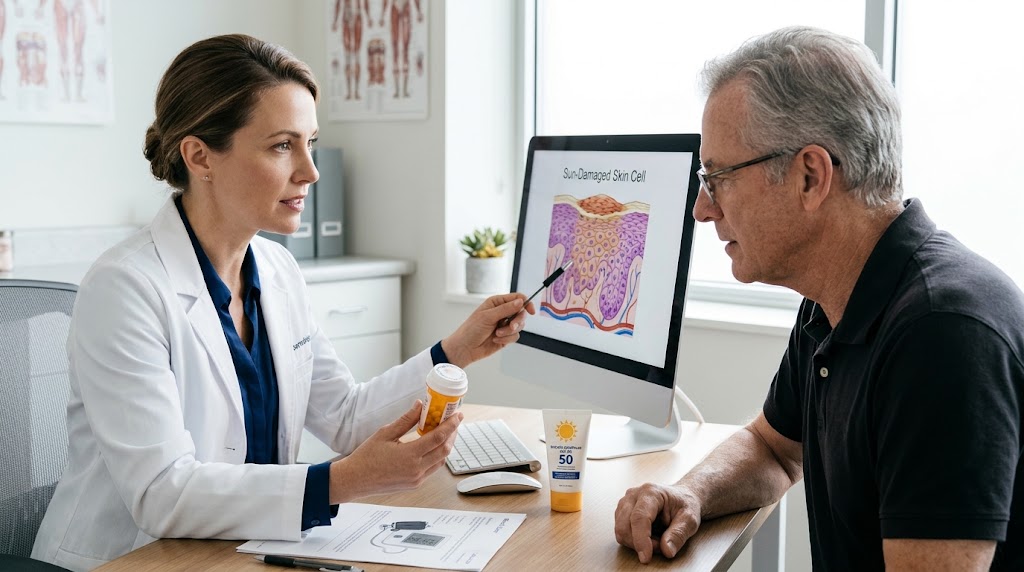
Did you know that the common blood-pressure medicine hydrochlorothiazide (HCTZ) has been linked to a small but increased risk of non-melanoma skin cancer, particularly squamous cell carcinoma? Regulatory updates and research have highlighted this association, prompting greater awareness among patients and clinicians. A Dermatologist can advise on skin monitoring and sun-protection strategies for those taking the medication.
“Your patient’s blood pressure medication may be increasing their risk for nonmelanoma skin cancer… alternative treatments for hypertension are recommended, along with reinforced sun-protective counselling and skin checks.”
Key Areas We Will Cover
- The link between hydrochlorothiazide and non-melanoma skin cancer
- How strong the evidence is and what it means in practice
- Which patients may need closer monitoring
- Practical steps including sun protection and skin checks
- Alternative diuretics and when to discuss options with your doctor
- The role of a Dermatologist in ongoing care
What Is the Connection Between HCTZ and Skin Cancer?
Hydrochlorothiazide is a thiazide diuretic widely used to treat high blood pressure and fluid retention.
Studies have shown an association with increased risk of non-melanoma skin cancer, especially squamous cell carcinoma. The medicine acts as a photosensitiser, making the skin more vulnerable to ultraviolet damage, and some evidence suggests it may also have carcinogenic potential. In 2020 the US FDA updated product labelling to reflect this risk. Similar concerns have been noted with chlorthalidone in certain populations.
How Significant Is the Risk?
At a population level the absolute increase in risk is relatively small.
However, the relative risk rises with longer duration and higher cumulative dose. Patients who already have risk factors for skin cancer (fair skin, history of significant sun exposure, previous skin cancers, immunosuppression or outdoor occupations) may be more vulnerable. The association appears stronger for squamous cell carcinoma than for basal cell carcinoma.
Are All Thiazide Diuretics the Same?
Not all thiazide-type diuretics carry the same evidence of risk.
Bendroflumethiazide and indapamide have not been linked to the same increase in non-melanoma skin cancer in the available data. In the UK, bendroflumethiazide has traditionally been a commonly prescribed thiazide. Any decision to change medication should be made with the prescribing doctor, balancing blood-pressure control against individual skin-cancer risk.
What Should Patients Taking HCTZ Do?
Practical measures can help reduce risk.
- Practise rigorous sun protection: daily broad-spectrum sunscreen, protective clothing, hats and seeking shade
- Perform regular self-examination of the skin and note any new or changing lesions
- Attend professional skin checks, especially if you have additional risk factors
- Discuss your personal risk profile with your GP or a Dermatologist
These steps are particularly important for anyone on long-term HCTZ therapy.
When Should You See a Dermatologist?
A Dermatologist assessment is valuable if you take hydrochlorothiazide and have:
- A history of skin cancer or precancerous lesions
- Fair skin or high cumulative sun exposure
- New or changing moles, scaly patches or non-healing sores
- Concerns about monitoring while remaining on the medication
Early detection of non-melanoma skin cancer greatly improves treatment outcomes. You can find detailed information on assessment and management on our skin cancer treatment pages.
How Can UK Patients Access Advice?
Both your GP (who manages blood-pressure medication) and a Dermatologist (who assesses skin risk) play important roles.
At The Skin Care Network, located at 68-70 Union St, Barnet EN5 4HZ, United Kingdom, our consultant Dermatologists provide thorough skin examinations and personalised advice on sun protection and surveillance for patients concerned about medication-related risks. Call +44 20 8441 1043 to book a consultation.
Conclusion
Hydrochlorothiazide is associated with a small increased risk of non-melanoma skin cancer, particularly squamous cell carcinoma, through photosensitising and possibly carcinogenic effects. The absolute risk remains modest for most people, but those with additional risk factors benefit from enhanced sun protection, regular skin checks and open discussion with their doctors about the most suitable blood-pressure treatment. A Dermatologist can support effective monitoring and early detection.
Get Started Today
Taking hydrochlorothiazide and concerned about skin cancer risk? Book a skin check with a Dermatologist at The Skin Care Network for expert assessment and tailored prevention advice.
Frequently Asked Questions
This FAQ section answers common questions about hydrochlorothiazide and skin cancer risk, supporting informed decisions with guidance from a Dermatologist.
It is associated with an increased risk of non-melanoma skin cancer, especially squamous cell carcinoma. The absolute risk increase is small for most people but becomes more relevant with long-term use and in higher-risk individuals.
No. Do not stop any prescribed medication without medical advice. Discuss the benefits and risks with your GP, who can consider alternatives if appropriate.
Bendroflumethiazide and indapamide have not shown the same association with skin cancer in available studies. Any change must be decided by your prescribing doctor.
Consistent sun protection and regular skin examination (self-checks plus professional review when indicated) are the key practical steps.
People with fair skin, previous skin cancers, heavy sun exposure, immunosuppression or long-term high-dose HCTZ use benefit most from closer surveillance by a Dermatologist.
Our skin cancer treatment pages provide detailed information on signs to watch for and available assessment methods.