 SEARCH THIS WEBSITE
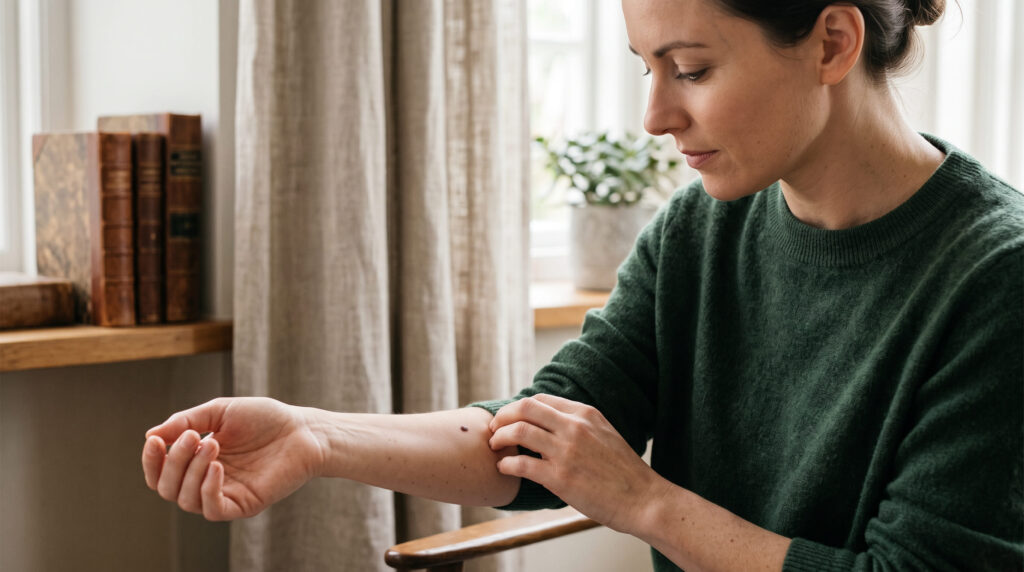
Did you know that an itchy mole is not always a sign of cancer? Most cases of mole itching are caused by everyday factors such as dryness, friction or minor irritation. However, persistent itching especially when combined with other changes should never be ignored, as it can occasionally be an early warning sign of melanoma.
“Most itchy moles are harmless, but persistent itching that lasts more than two weeks or is accompanied by visible changes warrants professional evaluation by a Dermatologist.”
Key Areas We Will Cover
- Why moles can become itchy
- Common harmless causes of itchy moles
- When itching may signal a more serious problem
- The ABCDE warning signs of melanoma
- How a Dermatologist assesses an itchy mole
- Practical advice for UK patients
Introduction
Many people notice a mole that suddenly becomes itchy and immediately worry about skin cancer. While itching can be a feature of melanoma in some cases, the majority of itchy moles have benign explanations. Understanding the difference between everyday irritation and potentially concerning changes helps you decide when to seek advice. This article explains the common causes, the red flags to watch for, and why assessment by a Dermatologist provides the most reliable answer. At The Skin Care Network our consultant Dermatologists regularly evaluate moles that have become symptomatic.
Are Itchy Moles Always Cancer?
No. An itchy mole is not always cancer.
Most moles that itch do so because of external irritation or skin dryness rather than malignancy. Cancer Research UK and other authoritative sources list change in sensation (including itchiness) as one possible warning sign of melanoma, but it is rarely the only feature. Isolated itching without other changes is usually benign.
What Are the Common Harmless Causes of an Itchy Mole?
Everyday factors account for the majority of itchy moles.
These include:
- Dry skin or eczema in the surrounding area
- Friction from clothing, straps, jewellery or shaving
- Minor trauma or a recent scratch
- Reaction to new skincare products, detergents or chemicals
- Benign growths that can look or feel like moles, such as seborrhoeic keratoses
In these situations the itching often settles once the irritant is removed or the skin is moisturised.
When Should You Worry About an Itchy Mole?
Seek medical advice if the itching is persistent or accompanied by other changes.
Particular reasons for prompt review include:
- Itching that lasts longer than two weeks without an obvious cause
- Any of the ABCDE features of melanoma appearing alongside the itch
- Bleeding, oozing, crusting or ulceration
- Rapid growth or a change in shape or colour
- A mole that looks different from all your other moles (the “ugly duckling” sign)
These features raise the possibility of melanoma or another skin condition that needs professional assessment.
What Are the ABCDE Warning Signs of Melanoma?
The ABCDE rule is a useful guide for spotting potentially concerning moles.
- A – Asymmetry: one half of the mole does not match the other
- B – Border: edges are irregular, ragged or blurred
- C – Colour: uneven colour or multiple shades (brown, black, red, white or blue)
- D – Diameter: larger than 6 mm (about the size of a pencil eraser), although smaller moles can still be significant
- E – Evolving: any change in size, shape, colour, elevation or symptoms such as itching or bleeding
If an itchy mole shows one or more of these features, arrange an appointment without delay.
How Does a Dermatologist Assess an Itchy Mole?
Assessment combines clinical examination with specialised tools.
A Dermatologist will take a history of the itching and any other changes, examine the mole and the rest of your skin, and use dermoscopy to view subsurface structures. If there is any diagnostic uncertainty, a biopsy may be recommended so the tissue can be examined under the microscope. This approach distinguishes harmless irritation from lesions that require treatment.
What Should You Do If You Have an Itchy Mole?
Start by noting how long the itching has been present and whether any other changes have occurred.
Avoid scratching or attempting to treat the mole yourself. Book an appointment with your GP or, for specialist assessment, directly with a Dermatologist. Early evaluation provides reassurance in most cases and ensures that any significant lesion is identified promptly.
Conclusion
An itchy mole is not always cancer. The majority are caused by dryness, friction or other benign factors. However, persistent itching lasting more than two weeks, or itching accompanied by changes in size, shape, colour or other ABCDE features, should be assessed by a Dermatologist. Professional evaluation offers accurate diagnosis, peace of mind and, when needed, early intervention. Regular self-examination combined with timely specialist review remains the safest approach to mole health.
Get Started Today
Worried about an itchy mole? Book a consultation with a Dermatologist at The Skin Care Network for expert assessment and clear advice.
Frequently Asked Questions
This FAQ section answers common questions about itchy moles and skin cancer risk, supporting informed decisions with guidance from a Dermatologist.
No. Most itchy moles are caused by irritation, dryness or friction. Melanoma is only one of many possible reasons for itching and is usually accompanied by other visible changes.
If the itching lasts more than two weeks without an obvious cause, or if any ABCDE features are present, arrange an appointment promptly.
Yes. Dry skin and eczema commonly cause itching in and around moles, especially in colder weather or after using harsh soaps.
No. Avoid scratching, picking or applying unproven remedies. Professional assessment is the safest next step.
They may recommend a biopsy under local anaesthetic so the tissue can be examined histologically. This provides a definitive diagnosis and guides any further treatment.


