SEARCH THIS WEBSITE

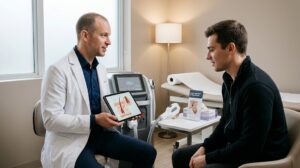
Did you know that pseudofolliculitis barbae, commonly called razor bumps, is a chronic inflammatory condition that can cause ongoing discomfort, scarring and pigmentation changes, particularly in men with curly or coarse hair? The first formal consensus recommendations on diagnosis and management have now been published, offering clearer guidance for patients and clinicians. A Dermatologist can provide accurate assessment and a personalised treatment plan.
“These recommendations are long overdue… they address a condition that has been hiding in plain sight for decades.”
Key Areas We Will Cover
- What pseudofolliculitis barbae is and who it affects
- Key points from the new consensus recommendations
- Practical shaving and hair-removal advice
- Topical and systemic treatment options
- The role of laser hair removal
- When to see a Dermatologist in the UK
What Is Pseudofolliculitis Barbae?
Pseudofolliculitis barbae (PFB) is a chronic inflammatory skin condition caused by shaved hairs that curve back and penetrate the skin.
It most often affects the beard area in men and presents as follicular papules, pustules, inflammation, post-inflammatory hyperpigmentation and, in some cases, scarring. While it can occur in any ethnicity, it is significantly more common and often more severe in people with tightly curled or coarse hair, particularly those with skin of colour.
Why Have New Consensus Recommendations Been Published?
Until now there were no formal guidelines specifically for PFB.
A Delphi consensus study involving board-certified dermatologists reviewed the evidence and reached agreement on 40 practical statements covering diagnosis, behavioural measures, topical and oral treatments, procedural options and occupational considerations. These recommendations recognise PFB as a genuine medical condition rather than a simple cosmetic inconvenience.
How Is Pseudofolliculitis Barbae Diagnosed?
Diagnosis is primarily clinical.
A Dermatologist assesses the distribution of papules and pustules, the presence of ingrown hairs and any associated pigmentation or scarring. Dermoscopy can be a useful adjunct to confirm ingrown hairs, monitor response to treatment and help educate patients about the condition.
What Shaving and Hair-Removal Advice Is Recommended?
Behavioural changes form the foundation of management.
Key consensus points include:
- Avoid shaving during acute inflammatory flares
- Prefer electric clippers or trimmers that leave 0.5–1 mm of hair
- If using a razor, single-blade razors may be better tolerated than multi-blade
- Complete hair removal is not always necessary and can worsen the problem
Leaving a very short stubble prevents the hair shaft from retracting fully beneath the skin surface and reducing further penetration.
What Topical and Systemic Treatments Are Advised?
Treatment is stepped according to severity.
For inflammatory papules and pustules, topical benzoyl peroxide 5% combined with clindamycin 1% is commonly recommended. Short courses of low-potency topical corticosteroids can help settle acute flares. Topical retinoids and certain combination creams may improve hyperkeratosis and post-inflammatory hyperpigmentation.
For moderate-to-severe disease, oral tetracyclines (such as doxycycline) are considered a first-line systemic option. These approaches aim to reduce inflammation while longer-term strategies address the underlying hair growth pattern.
How Effective Is Laser Hair Removal for Pseudofolliculitis Barbae?
Laser hair removal is regarded as a disease-modifying treatment.
By reducing the number of hairs that can become ingrown, laser therapy can produce longer-lasting improvement. The Nd:YAG laser is generally preferred for darker skin types (Fitzpatrick III–VI), while Alexandrite lasers may be suitable for lighter skin. Treatment continues until satisfactory improvement is achieved rather than for a fixed number of sessions. Electrolysis is an alternative permanent hair-removal option in selected cases. You can learn more about modern laser systems on our page introducing the Splendor X laser.
When Should You See a Dermatologist?
Specialist review is recommended if razor bumps are persistent, painful, causing scarring or pigmentation, or interfering with daily life or work.
A Dermatologist can confirm the diagnosis, exclude other conditions (such as acne or bacterial folliculitis), and create a tailored plan that may combine behavioural advice, medication and procedural treatments.
At The Skin Care Network, located at 68-70 Union St, Barnet EN5 4HZ, United Kingdom, our consultant Dermatologists assess and manage pseudofolliculitis barbae with an understanding of both the medical and practical aspects of the condition. Call +44 20 8441 1043 to book a consultation.
Conclusion
Pseudofolliculitis barbae is a chronic inflammatory condition driven by ingrown hairs after shaving. The first consensus recommendations provide clear, practical guidance on diagnosis, shaving techniques, topical and oral treatments, and the role of laser hair removal. Recognising PFB as a medical issue rather than a minor cosmetic problem allows more effective, long-term management. Early assessment by a Dermatologist offers the best chance of controlling inflammation, reducing scarring and improving quality of life.
Get Started Today
Struggling with persistent razor bumps or related inflammation? Book a consultation with a Dermatologist at The Skin Care Network for expert diagnosis and a personalised treatment plan.
Frequently Asked Questions
This FAQ section answers common questions about pseudofolliculitis barbae, supporting informed decisions with guidance from a Dermatologist.
Yes. Razor bumps is the common term for pseudofolliculitis barbae, a chronic inflammatory reaction to ingrown hairs.
It is most common in men with curly or coarse hair and occurs more frequently and severely in people with skin of colour, although it can affect any ethnicity.
Yes. Using electric clippers that leave a short stubble (0.5–1 mm) and avoiding shaving during flares are key consensus recommendations.
Yes. Laser hair removal is considered disease-modifying because it reduces the hairs that can become ingrown. Suitable wavelengths depend on skin type.
If the condition is persistent, painful, scarring, causing significant pigmentation or affecting your confidence or work, specialist assessment is advised.
Yes. Topical antibiotics and benzoyl peroxide, short-course topical steroids, retinoids and, for more severe cases, oral tetracyclines are commonly used under Dermatologist guidance.