 SEARCH THIS WEBSITE
Did you know that over 170,000 people in the UK are affected by skin cancer each year, with non-melanoma cases alone exceeding 150,000? Yet, early detection through professional dermatologist assessments can prevent up to 99% of deaths from melanoma, the most dangerous form.
Key Areas We Will Cover
- The cellular origins and triggers of skin cancer development
- Main types of skin cancer and their distinct starting points
- Early warning signs and how to spot them using proven methods
- Breakthrough research on microbiome, genetics, and prevention for 2026
- Diagnostic approaches and treatment options from expert dermatologists
- Practical prevention strategies tailored for UK residents
- When to seek professional help at a specialist clinic
Introduction
Skin cancer starts when DNA damage in skin cells leads to uncontrolled growth, often triggered by ultraviolet radiation from the sun or artificial sources. As the UK’s most common cancer, with melanoma rates rising 30% in the last decade, understanding how skin cancer begins is vital for early intervention. This guide explores the science behind its origins, drawing on recent 2025-2026 research to provide actionable insights. Whether you are concerned about a changing mole or seeking preventive advice, consulting a dermatologist ensures personalised care to safeguard your skin health.
The Cellular Origins of Skin Cancer
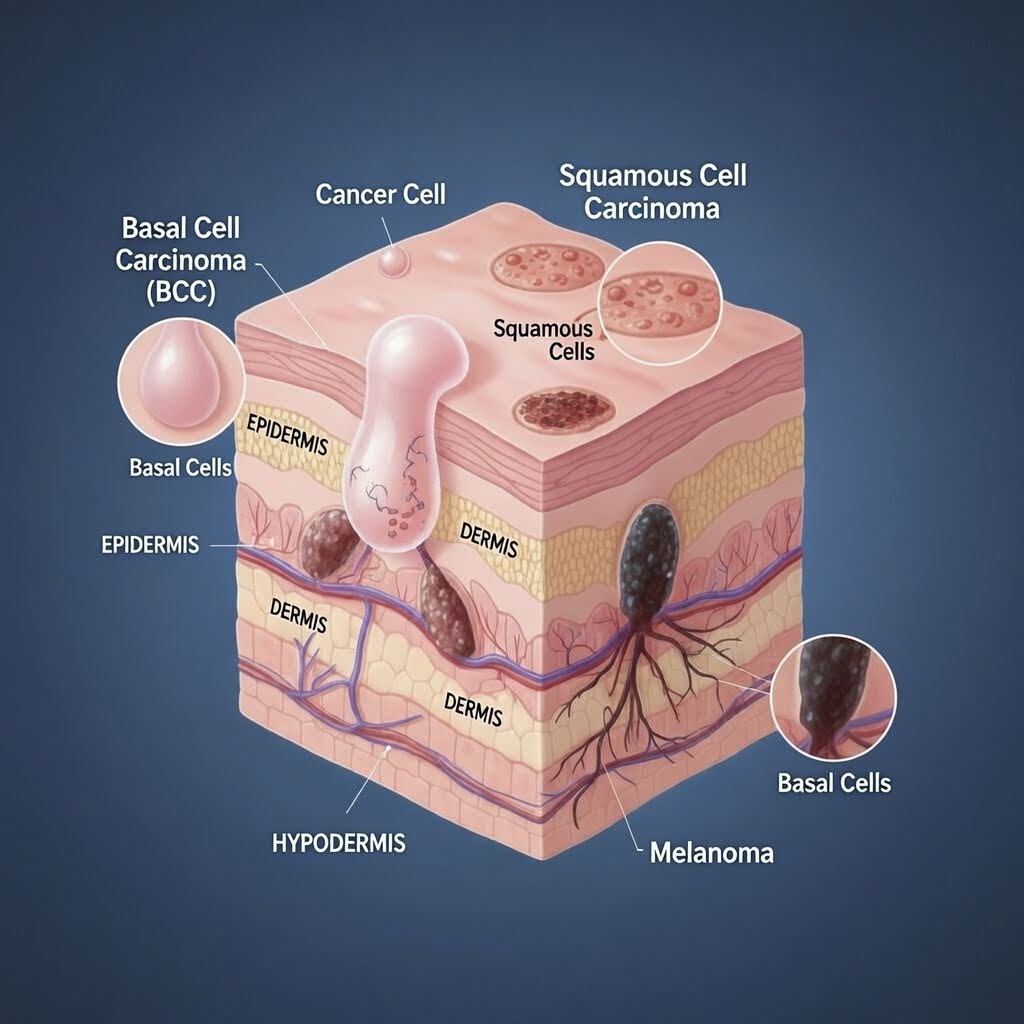
Skin cancer originates in the epidermis, the outermost layer of skin, where cells mutate due to accumulated damage. Normal skin cells divide and die in a regulated cycle, but mutations disrupt this, causing abnormal proliferation.
Recent studies highlight how ultraviolet rays penetrate skin layers, altering DNA and sparking cancerous changes. For instance, a 2025 Harvard and NIH study revealed that subtle microbiome shifts, such as expansions in Malassezia fungi and Betapapillomavirus viruses, predict squamous cell carcinoma risk with over 90% accuracy, even before visible symptoms. These microbial “red flags” mirror functional immunosuppression, often seen in ageing or transplant patients.
Main Types of Skin Cancer and How They Develop
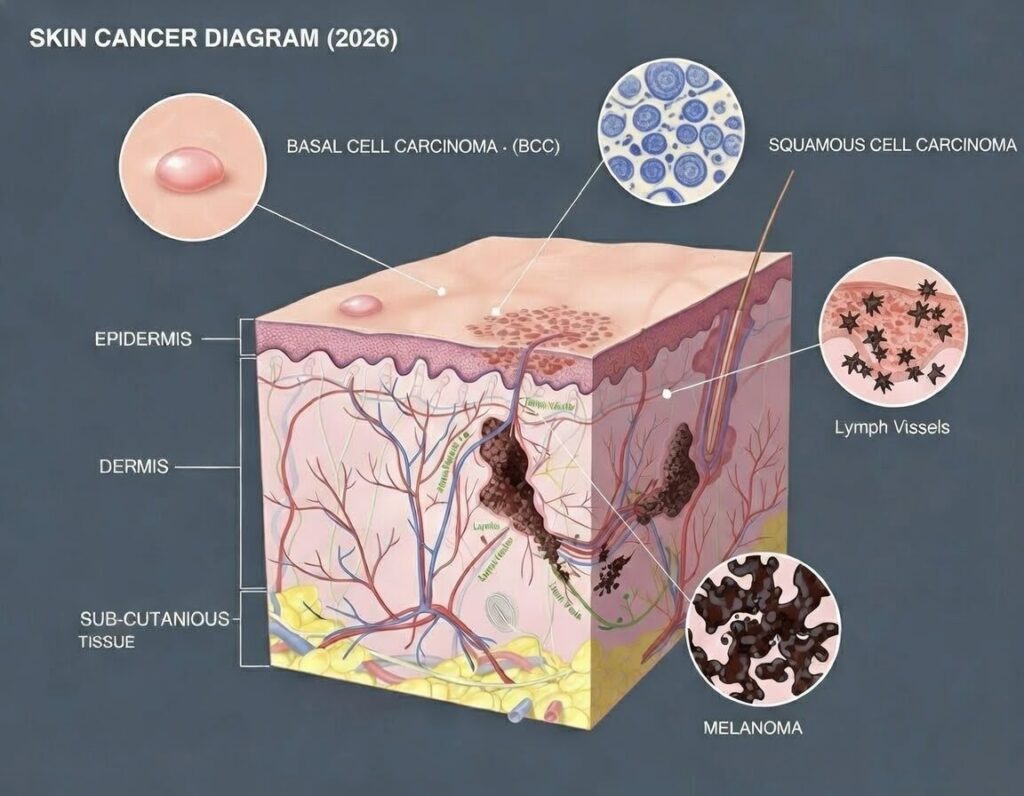
Skin cancer manifests in several forms, each starting in specific cell types.
Basal Cell Carcinoma (BCC)
The most common type, BCC begins in basal cells at the epidermis base. It grows slowly, often appearing as pearly bumps or non-healing sores on sun-exposed areas like the face.
Squamous Cell Carcinoma (SCC)
SCC originates in squamous cells, forming the epidermis’s upper layers. It develops faster, presenting as scaly patches or firm nodules, with higher spread potential if untreated.
Melanoma
The most aggressive, melanoma starts in melanocytes, pigment-producing cells. It can arise from existing moles or new growths, spreading rapidly if not caught early.
Precancerous conditions like actinic keratosis (rough, scaly spots) or Bowen’s disease (red patches) can progress to SCC, emphasising the need for monitoring.
Early Warning Signs and Detection Methods
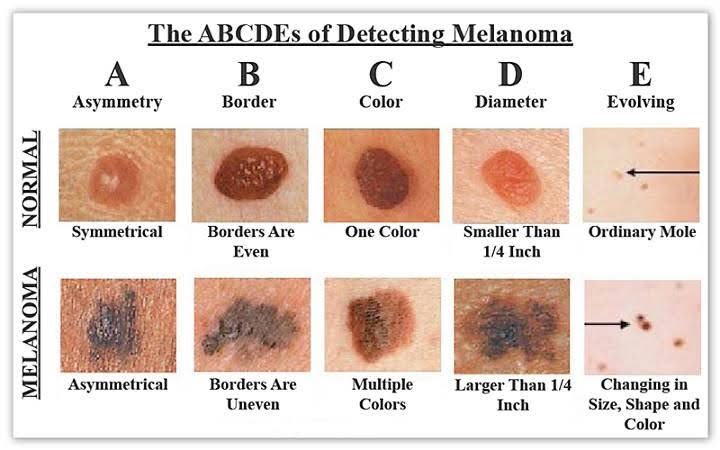
Recognising skin cancer’s onset involves vigilance for changes. Use the ABCDE rule for moles:
- Asymmetry: One half is unlike the other
- Border: Irregular, notched edges
- Colour: Varied shades of brown, black, or red
- Diameter: Larger than 6mm
- Evolving: Changes in size, shape, or colour
Other signs include sores that bleed or crust without healing, rough patches, or translucent bumps. About 70-80% of melanomas develop on normal skin, not moles, per 2025 research.
Breakthrough Research and Risk Factors for 2026
Recent advances reveal multifaceted causes beyond UV exposure. A 2026 study links vitamin B3 (nicotinamide) supplements to a 14% reduction in new non-melanoma skin cancers, with up to 54% efficacy if started post-diagnosis. Genetic predispositions, fair skin, and family history elevate risks, while microbiome dysbiosis in ageing skin mimics immunosuppression.
In the UK, melanoma trends show stabilisation in younger groups due to awareness campaigns, but rises in older men from cumulative exposure. Emerging AI tools for detection and personalised immunotherapy promise better outcomes.
Diagnosis and Treatment Options
Dermatologists use dermoscopy, biopsies, and confocal microscopy for precise diagnosis. Early-stage cancers are highly treatable with excision, topical therapies, or Mohs surgery (99% success rate).
Advanced cases may involve immunotherapy or targeted drugs, with 2026 forecasts emphasising interception of premalignant states to prevent progression.
Prevention Strategies for UK Residents
Protect against UV-driven damage:
- Apply broad-spectrum SPF 50+ daily, even in winter
- Seek shade between 11am and 3pm
- Wear protective clothing, hats, and sunglasses
- Avoid tanning beds, banned for under-18s in the UK
- Perform monthly self-checks and annual dermatologist screenings
Probiotic skincare and ceramide-based barrier repair support microbiome health, per 2025 insights.
Conclusion
Skin cancer begins with subtle cellular changes, often preventable through awareness and protection. Key takeaways include recognising early signs via ABCDE, leveraging microbiome and genetic research for risk assessment, and prioritising UV avoidance. With melanoma survival rates climbing due to innovations like AI detection and vitamin B3 supplementation, proactive steps can significantly reduce risks. Early consultation with a dermatologist remains the best defence for long-term skin health.
Take Control of Your Skin Health Today
Concerned about a mole or skin change? Schedule a comprehensive check with our expert dermatologists at The Skin Care Network.
📅 Book your 2026 screening now
📞 Call +44 20 8441 1043 or request an appointment online
Visit us at 68-70 Union St, Barnet EN5 4HZ, United Kingdom
Frequently Asked Questions
Navigating skin cancer concerns can be daunting, especially with evolving research. This section addresses common questions to empower you with knowledge and encourage timely action.
Primarily, UV radiation damages DNA, leading to mutations. Recent studies also link microbiome imbalances and genetics.
Follow the ABCDE rule; any evolving irregularity warrants a dermatologist visit.
Yes, through sun protection, avoidance of tanning, and regular checks. Nicotinamide supplements show promise in reducing recurrence.
Fair-skinned individuals, those with family history, or over 70, per 2026 trends showing rises in older groups.
Immediately for suspicious changes, or annually for high-risk profiles. Early detection boosts cure rates to 99%.


