 SEARCH THIS WEBSITE
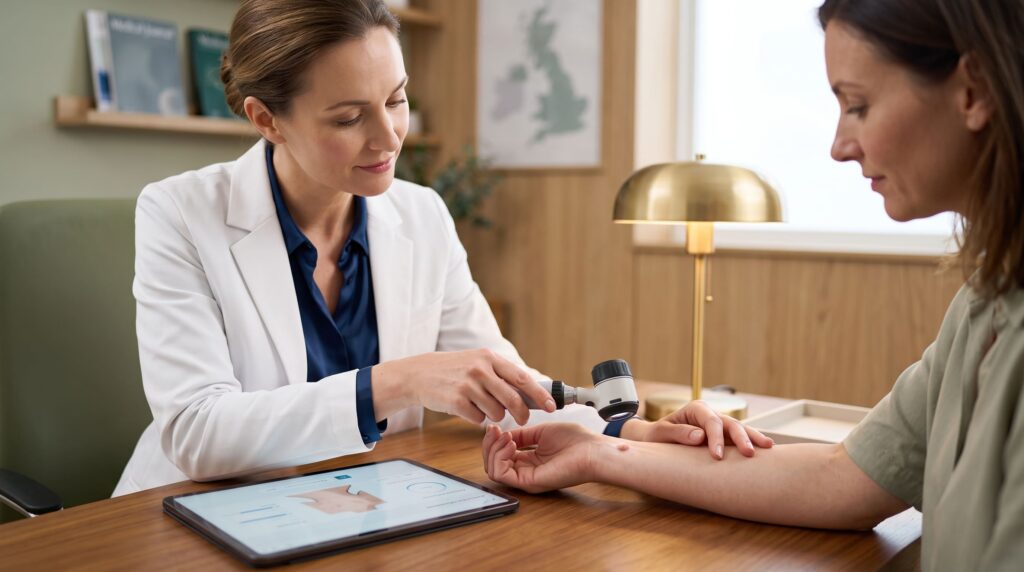
Did you know that most skin lumps are harmless, yet attempting to remove them yourself can lead to infection, scarring or delayed diagnosis of something more serious? The only safe way to get rid of a skin lump is after a proper professional assessment. Treatment depends entirely on the cause, which is why self-diagnosis and DIY removal are strongly discouraged.
“Because it is unsafe to self-diagnose, the first and most important step is to have a healthcare professional evaluate the lump.”
Key Areas We Will Cover
- Common types of skin lumps and what causes them
- Why you should never try to remove a lump yourself
- Red-flag symptoms that need prompt medical attention
- How a GP and Dermatologist assess skin lumps
- Professional treatment options for cysts, lipomas and other lumps
- Practical next steps for UK patients
Introduction
Skin lumps are extremely common and range from simple cysts and lipomas to skin tags, inflamed spots and, less often, more significant growths. Many people search for ways to get rid of them quickly, but the correct approach always starts with accurate diagnosis. This article explains the main causes, when to seek help, and the safe professional methods used to remove or manage skin lumps. A Dermatologist is often the most appropriate specialist for assessment and treatment of skin-based lumps.
What Are the Most Common Types of Skin Lumps?
Skin lumps have many different causes, and treatment varies accordingly.
Frequent examples include:
- Epidermoid or sebaceous cysts: firm, slow-growing sacs filled with keratin
- Lipomas: soft, movable fatty lumps beneath the skin
- Skin tags: small, soft, flesh-coloured growths
- Seborrhoeic keratoses: waxy, stuck-on growths that increase with age
- Abscesses or boils: painful, infected collections of pus
- Dermatofibromas: firm, fibrous nodules
Less commonly, a lump may represent a swollen lymph node, a hernia, or a skin cancer. Only a clinical examination can distinguish these reliably.
Why You Should Never Try to Remove a Skin Lump Yourself
Squeezing, cutting, lancing or using home remedies carries real risks.
DIY attempts can introduce infection, cause the lump to enlarge or become more inflamed, leave unnecessary scarring, and most importantly delay diagnosis if the lump is something that needs specialist care. Complete removal of a cyst, for example, requires excision of the entire sac; simply draining the contents usually leads to recurrence.
When Should You See a Doctor About a Skin Lump?
Book an appointment promptly if the lump shows any of these features:
- It is getting bigger
- It is painful, red, hot or shows signs of infection
- It feels hard and fixed (does not move under the skin)
- It lasts longer than two weeks without improvement
- It returns after previous removal
- It is located in the breast, testicle, neck, armpit or groin
- It is accompanied by unexplained weight loss, night sweats or general unwellness
Even without red flags, any new or worrying lump deserves professional evaluation for peace of mind.
What Happens When You See a GP or Dermatologist?
Your first point of contact in the UK is usually your GP.
A GP can examine the lump, decide whether it is likely benign, and arrange ultrasound, blood tests or referral if needed. For many skin-based lumps (cysts, lipomas, skin tags, seborrhoeic keratoses), referral to a Dermatologist is appropriate. A Dermatologist performs a detailed skin examination, often with dermoscopy, and can proceed directly to treatment or arrange biopsy if there is any diagnostic uncertainty.
How Are Skin Lumps Removed Professionally?
Treatment is tailored to the specific diagnosis.
- Cysts: complete surgical excision of the sac under local anaesthetic is the definitive method; simple drainage often leads to recurrence.
- Lipomas: surgical excision or, in selected cases, liposuction.
- Skin tags: snip excision, cautery or cryotherapy.
- Seborrhoeic keratoses: cryotherapy, curettage or shave excision.
- Infected lumps: antibiotics, incision and drainage, followed by definitive removal once inflammation settles.
All procedures are performed under local anaesthetic in a clinical setting, with the option of sending tissue for histological examination when indicated.
Can Skin Lumps Be Prevented?
Many lumps cannot be prevented, but good skin care and sun protection help.
Avoiding trauma to the skin, managing acne carefully, and protecting against ultraviolet damage reduce the risk of certain growths. Regular self-examination allows earlier detection of any new or changing lumps.
How Can UK Patients Arrange Safe Assessment and Removal?
Start with your GP for initial advice and, if appropriate, referral.
Private assessment by a Dermatologist offers rapid access for diagnosis and treatment of skin lumps.
At The Skin Care Network, located at 68-70 Union St, Barnet EN5 4HZ, United Kingdom, our consultant Dermatologists assess and treat a wide range of skin lumps, including cysts, lipomas and benign growths. Call +44 20 8441 1043 to book a consultation or discuss your concerns.
Conclusion
Getting rid of a skin lump safely begins with professional diagnosis rather than self-treatment. Most lumps are benign, but accurate identification determines the correct management and avoids complications. Red-flag features warrant prompt medical attention, while many common lumps can be straightforwardly removed by a Dermatologist under local anaesthetic once the diagnosis is confirmed. Seeking expert assessment is the most reliable way to resolve the problem and gain peace of mind.
Get Started Today
Concerned about a skin lump and want safe, professional advice on removal? Book a consultation with a Dermatologist at The Skin Care Network for expert assessment and personalised treatment options.
Frequently Asked Questions
This FAQ section answers common questions about skin lumps and safe removal, helping you make informed decisions with guidance from a Dermatologist.
No. This risks infection, incomplete removal and scarring. Professional assessment and treatment are always safer.
Often yes. Complete excision of the cyst wall is required for lasting removal.
No. Many harmless lumps can be left alone if they cause no symptoms. Removal is considered for cosmetic reasons, discomfort, recurrent infection, or diagnostic uncertainty.
Procedures are performed under local anaesthetic, so the area is numb. Mild discomfort afterwards is normal and usually well controlled with simple pain relief.
Most people return to normal activities within a few days. Stitches, if used, are typically removed after 7–14 days, and the scar continues to improve over subsequent months.


