SEARCH THIS WEBSITE
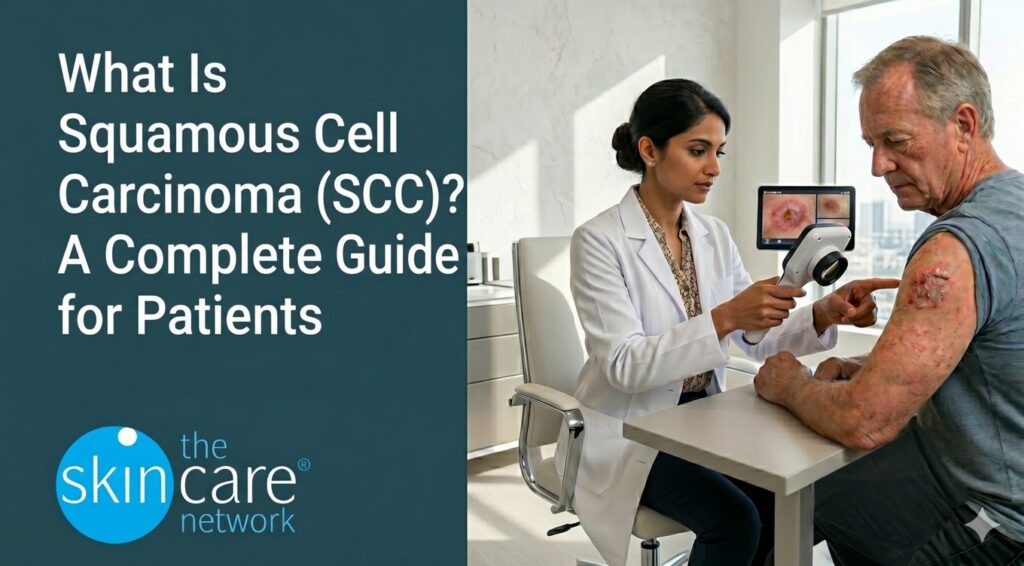
What Is Squamous Cell Carcinoma (SCC)? A Complete Guide for Patients
“Over 1 million cases of squamous cell carcinoma are diagnosed each year, making it one of the most common forms of skin cancer.”
A small, persistent scaly patch on your face or hand might seem harmless, but it could be an early warning sign of squamous cell carcinoma. Early detection leads to highly successful outcomes, with most cases fully curable when caught promptly.
Key Areas We Will Cover:
- Definition and causes of squamous cell carcinoma
- How SCC differs from other skin cancers like basal cell carcinoma and melanoma
- Typical appearance and early signs
- Risk factors and prevention strategies
- Diagnosis and treatment options
- When to seek professional help
Introduction:
Squamous cell carcinoma, often abbreviated as SCC, is the second most common type of skin cancer. It develops in the squamous cells that form the middle and outer layers of the skin. While usually not life-threatening when detected early, understanding this condition empowers patients to take proactive steps toward prevention and timely treatment. At The Skin Care Network in Barnet, we specialise in expert skin cancer assessment and care to support your skin health journey.
What Is Squamous Cell Carcinoma?
Squamous cell carcinoma is a form of skin cancer that arises from squamous cells, flat cells located near the surface of the skin that continuously shed and renew. These cells make up part of the epidermis, the outermost layer of skin.
When DNA damage, often from ultraviolet radiation, causes these cells to grow uncontrollably, they can form malignant tumours. Cutaneous squamous cell carcinoma (cSCC) primarily affects sun-exposed areas but can develop anywhere on the body, including mucous membranes.
How Squamous Cell Carcinoma Differs from Other Skin Cancers
Understanding the differences helps patients recognise potential concerns more accurately.
Squamous Cell Carcinoma vs Basal Cell Carcinoma:
- SCC originates in the squamous cells of the upper epidermis.
- Basal cell carcinoma (BCC) develops in the basal cells at the bottom of the epidermis and is the most common skin cancer.
- SCC tends to grow faster and has a higher risk of spreading (metastasising) if untreated, whereas BCC usually remains localised.
Squamous Cell Carcinoma vs Melanoma:
- Melanoma arises from melanocytes, the pigment-producing cells, and is far more aggressive with a higher potential for rapid spread.
- SCC is generally less deadly than melanoma but requires prompt attention due to its ability to invade deeper tissues.
Typical Appearance of Squamous Cell Carcinoma
SCC often presents as:
- A firm, red nodule or bump
- A flat sore with a scaly or crusty surface
- A raised, wart-like growth that may bleed or ulcerate
- A persistent, rough, scaly patch that does not heal
It commonly appears on the face, ears, neck, lips, arms, and backs of the hands.
Early Signs to Watch For
Early detection improves outcomes significantly. Look out for:
- New growths or changes in existing skin lesions
- Sores that do not heal within weeks
- Rough, scaly patches that persist or bleed easily
- Raised areas on old scars or ulcers
- Wart-like sores on the lips, mouth, or genital areas
Any suspicious change warrants professional evaluation.
Risk Factors for Squamous Cell Carcinoma
Key risk factors include prolonged sun exposure, use of tanning beds, fair skin, history of sunburns, weakened immune system, and previous skin cancers. Chronic wounds, scars, or exposure to certain chemicals can also increase risk.
Prevention Strategies
Protect your skin with broad-spectrum sunscreen (SPF 30 or higher), seek shade during peak sun hours, wear protective clothing, and avoid tanning beds. Regular self-examinations and annual skin checks are essential.
Diagnosis and Treatment
A dermatologist typically diagnoses SCC through clinical examination and skin biopsy. Treatment options range from surgical excision and Mohs surgery to cryotherapy, topical medications, or radiation, depending on the cancer’s size, location, and stage. Most cases are highly treatable when addressed early.
Conclusion
Squamous cell carcinoma is a common yet manageable skin cancer when identified early. By understanding its definition, differences from other skin cancers, typical appearance, and early signs, patients can take control of their skin health and seek timely intervention for the best possible results.
Protect Your Skin Today
Do not ignore changes in your skin. Book a professional skin cancer assessment at The Skin Care Network. Our experienced team at 68-70 Union Street, Barnet EN5 4HZ, provides expert care tailored to your needs. Contact us on 020 8441 1043 or visit our clinic for peace of mind and effective treatment options.
FAQ
It often appears as a scaly red patch, firm bump, or non-healing sore, typically on sun-exposed skin.
While usually curable when caught early, it can spread if left untreated, unlike basal cell carcinoma which rarely metastasises.
Growth rates vary, but some cases progress more quickly than basal cell carcinoma, making prompt evaluation important.
Yes, through consistent sun protection, avoiding tanning beds, and regular skin checks.
Visit a dermatologist if you notice any persistent skin changes, new growths, or sores that do not heal. Early assessment at a specialist clinic like the Skin Care Network can make all the difference.