SEARCH THIS WEBSITE
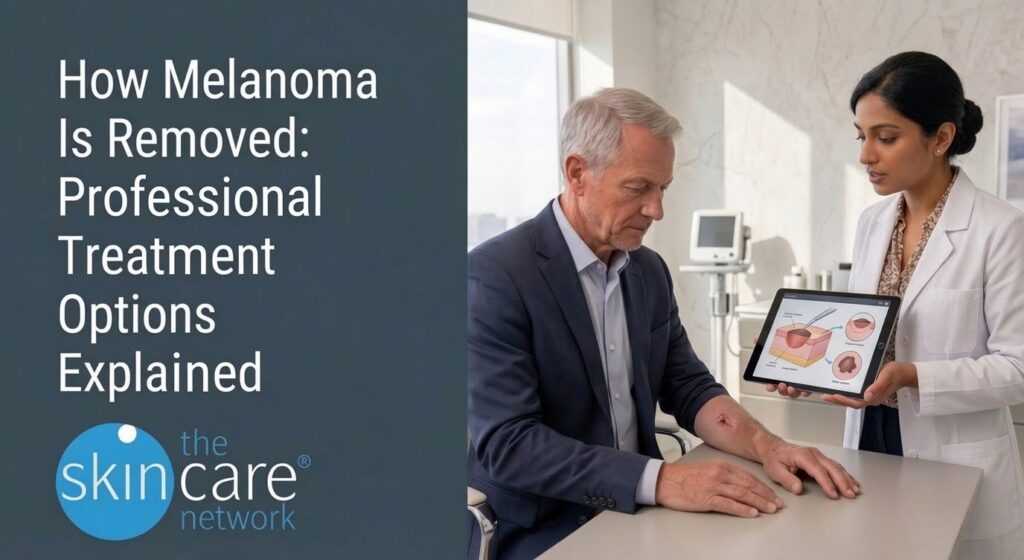
Did you know that melanoma is one of the most serious forms of skin cancer, yet early professional treatment can cure the majority of cases? When people search for “how to get rid of melanoma” or “how to remove melanoma”, the only safe and effective answer is specialist medical care. Self-treatment is never appropriate and can put lives at risk.
“Surgery remains the cornerstone of treatment for most melanomas, and when caught early it is often curative.”
Key Areas We Will Cover
- Why melanoma must only be treated by specialists
- Surgical options: wide local excision, Mohs surgery and lymph node evaluation
- Systemic treatments including immunotherapy and targeted therapy
- Radiation therapy and when it is used
- Recovery, risks and follow-up care
- How UK patients can access expert melanoma treatment
Introduction
Melanoma develops in the pigment-producing cells of the skin (melanocytes) and has the potential to spread if not treated promptly. It accounts for a minority of skin cancers but causes the majority of skin-cancer deaths. The good news is that thin, early-stage melanomas are frequently cured with surgery alone. This article explains the professional treatments used to remove melanoma, why DIY approaches are dangerous, and what UK patients can expect from modern care. A dermatologist at The Skin Care Network can assess any suspicious lesion and guide you through the next steps.
Why You Must Never Try to Remove Melanoma Yourself
Attempting to cut, burn, freeze or laser treatment a suspicious mole at home is extremely dangerous. Incomplete removal can leave cancer cells behind that continue to grow or spread through the bloodstream and lymphatic system.
This is why we at The skin Care network always recommend that you get a proper dermatologist opinion prior to removal of freckles with a laser, advanced electrolysis or cautery. Without laboratory examination of the tissue, you also lose the chance of an accurate diagnosis and proper staging. Infection, significant scarring and delayed specialist care are further risks. Only a qualified doctor should biopsy and treat melanoma.
Surgical Removal – The Mainstay of Treatment
Surgery is the primary treatment for most melanomas, especially those diagnosed at an early stage. The goal is complete removal of the cancer with a margin of healthy tissue.
Wide Local Excision
This is the standard procedure for the majority of invasive melanomas. After the diagnostic biopsy, the surgeon removes the biopsy site plus a measured margin of surrounding normal skin. Recommended margins are guided by the thickness of the melanoma (Breslow depth):
- Melanoma in situ – typically 0.5 cm
- ≤ 1 mm thick – 1 cm
- 1.01–2 mm thick – 1–2 cm
- More than 2 mm thick – 2 cm
The procedure is usually performed under local anaesthetic as a day-case operation. The tissue is examined by a pathologist to confirm clear margins.
Mohs Micrographic Surgery
Mohs surgery removes the tumour layer by layer while examining 100% of the margins under the microscope during the same procedure. It is mainly considered for selected cases of melanoma in situ (particularly lentigo maligna) in cosmetically sensitive areas such as the face. Wide local excision remains the standard for most invasive melanomas because of stronger long-term outcome data.
Lymph Node Evaluation
If the melanoma is thicker than about 0.8–1 mm or shows other high-risk features, a sentinel lymph node biopsy may be recommended. A tracer is used to identify the first lymph node(s) that drain the area. These are removed and checked for cancer cells. The results help determine whether further treatment is needed.
Treatments Beyond Surgery
When melanoma has spread to lymph nodes or other sites, or when the risk of recurrence is high, additional therapies are often used.
Immunotherapy
These medicines help the body’s immune system recognise and attack melanoma cells. Common options include PD-1 inhibitors (pembrolizumab, nivolumab) and CTLA-4 inhibitors (ipilimumab), sometimes given in combination. Immunotherapy can be used after surgery (adjuvant treatment) or as the main treatment for advanced disease.
Targeted Therapy
Around 40–50% of cutaneous melanomas carry a BRAF mutation. In these cases, tablets that block the abnormal BRAF and MEK proteins can be highly effective. Combinations such as dabrafenib + trametinib or encorafenib + binimetinib are commonly used. Genetic testing of the tumour is required first.
Radiation Therapy
Radiation is not first-line treatment for most primary melanomas. It may be used after surgery when the risk of recurrence is high, when surgery is not possible, or to relieve symptoms caused by melanoma that has spread (for example to bones or brain).
Recovery and Possible Risks
Most people recover from wide local excision within one to two weeks. Stitches are usually removed after 7–14 days. The scar starts red and firm but typically fades over months. Possible risks include infection, bleeding, delayed healing, numbness around the scar, and (after lymph-node procedures) lymphoedema. Your surgical team will give clear wound-care instructions and advice on when to seek help.
Follow-Up Care
Regular dermatologist reviews are essential after melanoma treatment. These include full-skin examinations, checks of the surgical site and lymph nodes, and education on self-examination and sun protection. People who have had one melanoma have a higher lifetime risk of developing another, so lifelong surveillance is important.
How UK Patients Can Access Expert Melanoma Care
If you notice a changing mole, a new pigmented lesion or any skin mark that concerns you, arrange a prompt assessment. Private dermatology clinics offer rapid access to diagnosis and treatment planning.
At The Skin Care Network, located at 68-70 Union St, Barnet EN5 4HZ, our dermatologists provide specialist assessment, biopsy and coordinated care for melanoma and other skin cancers. Call +44 20 8441 1043 to discuss your concerns or book a consultation.
Conclusion
Melanoma is a serious cancer, but when detected early it is highly treatable – often with surgery alone. The only safe way to remove melanoma is through professional medical care. Self-treatment is never appropriate. Key takeaways include the central role of wide local excision, the selective use of Mohs surgery, the importance of lymph-node staging, and the availability of effective systemic therapies for higher-risk disease. Early specialist evaluation remains the most important step you can take.
Get Started Today
Ready to have a suspicious mole or skin lesion checked? Book a consultation with a dermatologist at The Skin Care Network for expert assessment and personalised advice on melanoma and skin-cancer care.
Frequently Asked Questions
This FAQ section addresses common questions about melanoma removal and treatment, helping you make informed decisions with guidance from a dermatologist.
Yes. When detected early and treated with appropriate surgery, the majority of thin melanomas are cured. Outcomes are less favourable once the cancer has spread, which is why prompt specialist care is essential.
No. Attempting self-removal is dangerous, can leave cancer cells behind, prevents proper diagnosis and staging, and risks infection and scarring. Always see a qualified doctor.
Wide local excision removes the melanoma plus a predetermined margin of healthy tissue and is the standard for most invasive melanomas. Mohs surgery examines margins layer by layer during the procedure and is mainly used for selected melanoma in situ in cosmetically sensitive sites.
Many early melanomas need only surgery. Thicker tumours, those with positive lymph nodes, or advanced disease may require immunotherapy, targeted therapy or radiation. Your specialist will explain the recommendations based on the pathology results.
As soon as possible. Changes in size, shape, colour, or the appearance of a new or unusual lesion warrant prompt professional assessment. Early diagnosis significantly improves outcomes.