 SEARCH THIS WEBSITE
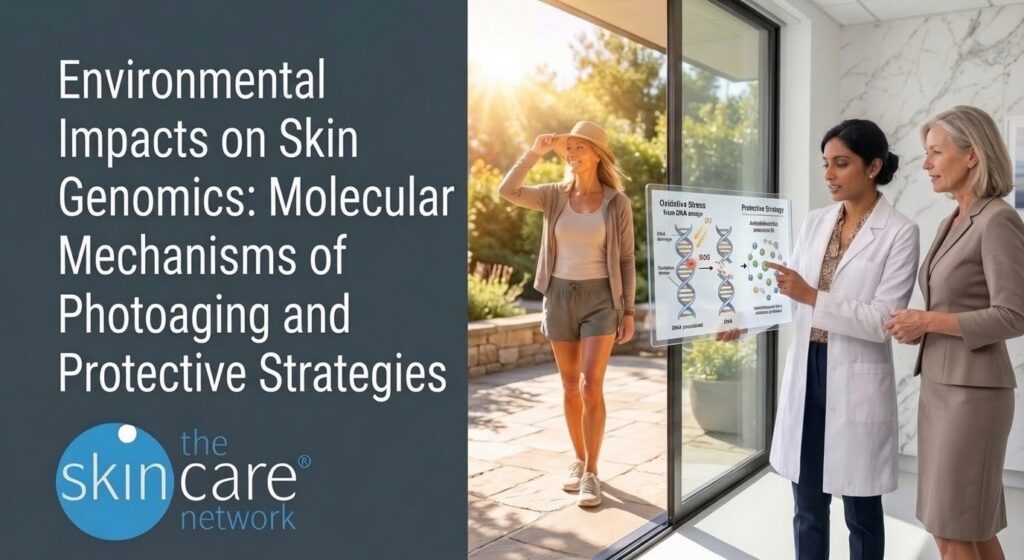
Did you know that up to 80–90% of visible skin ageing is driven by environmental factors rather than the simple passage of time? Ultraviolet radiation, pollution and other external stressors leave measurable marks on skin DNA, accelerating wrinkles, pigmentation and loss of elasticity. Understanding these molecular processes allows a Dermatologist to recommend precise protective strategies that go far beyond basic moisturising.
“Skin, as the body’s primary environmental interface, is continuously exposed to stressors that significantly impact its genomic integrity and accelerate ageing processes.”
Key Areas We Will Cover
- What photoaging is and how it differs from chronological ageing
- The molecular mechanisms of UV-induced DNA damage and genomic stress
- How reactive oxygen species and matrix metalloproteinases degrade collagen
- The role of pollution, infrared and visible light
- Evidence-based protective strategies recommended by a Dermatologist
- Practical daily routines and when to seek specialist advice
Introduction
Photoaging describes the premature ageing of skin caused by long-term environmental exposure, principally ultraviolet (UV) radiation. Unlike intrinsic (chronological) ageing, photoaging produces coarse wrinkles, uneven pigmentation, roughness and loss of firmness. At the genomic level, these changes begin with DNA damage, oxidative stress and altered gene expression. This article explains the key molecular pathways and outlines practical protective strategies. A Dermatologist at The Skin Care Network can assess your individual risk and create a personalised prevention plan.
What Is Photoaging and Why Does It Matter?
Photoaging is the cumulative damage to skin structure and function caused by chronic environmental exposure, primarily UV radiation. It accounts for the majority of visible skin ageing in fair and medium skin types and remains significant across all Fitzpatrick skin types.
Early intervention is highly effective. Daily photoprotection and targeted topicals can slow progression and, in some cases, partially reverse visible signs. Left unaddressed, photoaging also raises the risk of actinic keratoses and skin cancer.
How Does Ultraviolet Radiation Damage Skin DNA?
Ultraviolet radiation causes direct and indirect genomic damage that initiates photoaging.
UVB rays (280–315 nm) are absorbed by DNA and create characteristic lesions such as cyclobutane pyrimidine dimers (CPDs) and 6-4 photoproducts. These lesions distort the DNA helix and, if not repaired promptly by nucleotide excision repair, can lead to mutations. UVA rays (315–400 nm) penetrate deeper into the dermis and generate reactive oxygen species (ROS) that oxidise DNA bases, particularly forming 8-oxoguanine. Both pathways trigger inflammation, cell-cycle arrest and, over time, permanent changes in gene expression that drive the ageing phenotype.
What Role Do Reactive Oxygen Species and Matrix Metalloproteinases Play?
Reactive oxygen species act as the central mediators of photoaging.
When UV radiation generates excess ROS, they overwhelm the skin’s antioxidant defences. The resulting oxidative stress activates transcription factors such as AP-1 and NF-κB. These factors increase production of matrix metalloproteinases (MMPs), especially MMP-1, MMP-3 and MMP-9. MMPs break down collagen and elastin fibres in the dermis while simultaneously reducing new collagen synthesis by fibroblasts. The net result is progressive dermal thinning, loss of elasticity and the formation of wrinkles and sagging.
How Do Pollution, Infrared and Visible Light Contribute to Skin Genomic Stress?
Environmental stressors beyond UV also impact skin genomics.
Airborne pollutants such as polycyclic aromatic hydrocarbons and particulate matter generate additional ROS and can form DNA adducts. Infrared radiation contributes to heat-induced MMP upregulation and collagen degradation. Visible and blue light, especially in combination with UVA, can worsen pigmentation and oxidative stress in susceptible individuals. Together these factors amplify the genomic and structural damage initiated by UV.
What Protective Strategies Does a Dermatologist Recommend?
A multi-layered approach offers the strongest protection against photoaging.
Daily broad-spectrum sunscreen with SPF 30 or higher remains the single most effective intervention. It reduces both direct DNA damage and ROS generation. Additional strategies include:
- Topical antioxidants (vitamin C, vitamin E, niacinamide) that neutralise free radicals and support DNA repair
- Retinoids, which stimulate collagen production, normalise cell turnover and partially reverse established photodamage
- Oral nicotinamide (a form of vitamin B3) in selected high-risk patients to support cellular energy and DNA repair
- Physical barriers such as wide-brimmed hats, UV-protective clothing and shade-seeking behaviour
- Consistent evening routines that repair barrier function and reduce inflammation
A Dermatologist can tailor these measures to your skin type, lifestyle and degree of existing photodamage.
How Can UK Patients Integrate These Strategies into Daily Life?
Practical consistency matters more than perfection.
Apply a broad-spectrum sunscreen every morning as the final step of your skincare routine, even on cloudy days and when working indoors near windows. Reapply during prolonged outdoor exposure. Layer a vitamin C serum underneath sunscreen in the morning and a retinoid or niacinamide product in the evening, introducing actives gradually to minimise irritation. Regular full-skin examinations allow early detection of both photoaging changes and pre-cancerous lesions.
At The Skin Care Network, located at 68-70 Union St, Barnet EN5 4HZ, United Kingdom, our Dermatologists provide detailed skin assessments and personalised photoprotection plans. Call +44 20 8441 1043 to arrange a consultation.
Conclusion
Environmental stressors leave clear molecular signatures on skin DNA and accelerate visible ageing through DNA lesions, oxidative stress and collagen degradation. The most effective defence combines rigorous daily photoprotection, antioxidant support, retinoids and professional guidance. Early and consistent action can significantly slow photoaging and preserve skin health for the long term.
Key takeaways include the central role of UV-induced DNA damage, the importance of broad-spectrum sunscreen, the added value of antioxidants and retinoids, and the benefit of Dermatologist-led assessment for individualised strategies.
Get Started Today
Ready to protect your skin at the molecular level? Book a consultation with a Dermatologist at The Skin Care Network to receive a thorough skin assessment and a practical, evidence-based plan against photoaging.
Frequently Asked Questions
This FAQ section addresses common questions about photoaging mechanisms and protective strategies, helping you make informed decisions with guidance from a Dermatologist.
Photoaging is driven by external environmental factors, mainly UV radiation, and produces coarse wrinkles, uneven pigmentation and rough texture. Chronological ageing occurs more slowly and is characterised by finer wrinkles and gradual thinning. Most visible ageing in adults is a combination of both, with photoaging often dominating.
Yes. Broad-spectrum sunscreens that protect against both UVA and UVB significantly reduce the formation of cyclobutane pyrimidine dimers and oxidative DNA lesions. Daily use is one of the most evidence-based methods of slowing photoaging.
Yes. Sunscreen reduces the amount of UV that reaches the skin, but some residual radiation and environmental pollutants still generate free radicals. Topical antioxidants provide an additional layer of defence by neutralising these reactive molecules.
Consider a professional assessment if you notice progressive wrinkles, pigmentation changes, roughness, or if you have a history of significant sun exposure or previous skin cancers. A Dermatologist can evaluate the degree of photodamage and recommend both preventive and restorative treatments.
Oral nicotinamide supports cellular energy metabolism and DNA repair pathways. While strongest evidence exists for reducing new keratinocyte carcinomas in high-risk patients, it also offers supportive benefits against the cellular stress that drives photoaging. A Dermatologist can advise whether it is appropriate for you.


