SEARCH THIS WEBSITE
The principle of confocal microscopy. See more below on our dedicated device, reducing biopsies and improving diagnosis.
Did you know that Mohs micrographic surgery offers up to 99% cure rates for basal cell carcinomas and squamous cell carcinomas, far surpassing standard excision techniques?
“Mohs surgery represents the gold standard for treating high-risk non-melanoma skin cancers, combining precision removal with exceptional cosmetic outcomes.”
– British Association of Dermatologists
What You’ll Learn
- The importance of accurate pre-surgery diagnosis for skin cancer
- Advanced diagnostic tools used by expert dermatologists in London
- Step-by-step preparation for Mohs surgery
- What to expect on the day of your procedure
- Why choosing a specialist dermatologist clinic matters for optimal results
Introduction
Mohs micrographic surgery stands as a highly precise treatment for skin cancers, particularly in sensitive areas such as the face, where preserving healthy tissue is essential. At our dermatologist clinic, we prioritise thorough diagnosis to confirm Mohs as the ideal approach, ensuring the highest cure rates while minimising scarring. This guide details the diagnostic process and preparation, empowering patients across London and beyond to approach treatment with confidence.
Why Accurate Diagnosis Matters Before Mohs Surgery
Skin cancer diagnosis forms the foundation of effective treatment. Misjudging the extent or type of tumour could lead to incomplete removal or unnecessary procedures.
Our consultants conduct comprehensive assessments to determine suitability for Mohs surgery, which excels in treating basal cell carcinomas (BCCs), squamous cell carcinomas, and certain early melanomas.
Key benefits of precise pre-Mohs diagnosis include:
- Confirming cancer type and depth
- Identifying high-risk features, such as recurrence or aggressive subtypes
- Avoiding overtreatment for low-risk lesions better suited to alternatives
In the UK, non-melanoma skin cancers affect over 150,000 people annually, making expert evaluation crucial.
Advanced Diagnostic Techniques at Our Dermatologist’s Clinic
We employ state-of-the-art tools for non-invasive and accurate assessments.
Clinical Examination and History Review
Your consultation begins with a detailed medical history and visual inspection by an experienced consultant dermatologist.
We discuss previous treatments, sun exposure, and risk factors to build a complete picture.
Dermoscopy for Enhanced Visualisation
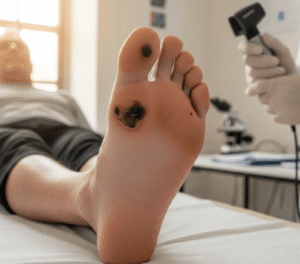
High-magnification dermoscopy allows us to examine lesions in detail, identifying patterns indicative of malignancy without incision.
This hand-held device with specialised lighting improves diagnostic accuracy significantly.
VivaScope Confocal Microscopy: A UK Private Clinic Exclusive
Our clinic features the VivaScope 1500, a laser scanning confocal microscope unique in UK private dermatology.
This technology provides real-time, cellular-level imaging directly on the skin, often eliminating the need for initial biopsies.
Benefits include:
- Immediate results during consultation
- Reduced patient discomfort
- Enhanced precision in mapping tumour boundaries
Biopsy and In-House Dermatopathology
If required, we perform a small biopsy under local anaesthetic.
Samples are analysed in our on-site, state-of-the-art laboratory by specialist dermatopathologists, ensuring rapid, reliable results.
This integrated approach minimises delays common in NHS pathways.
Preparing for Your Mohs Surgery Appointment
Preparation ensures a smooth procedure and optimal recovery.
Medication and Health Considerations
- Continue prescribed medications, including blood thinners like aspirin or warfarin, unless advised otherwise
- Inform us of supplements that may increase bleeding risk, such as ginseng or fish oil
- Discuss any health conditions during consultation
Practical Tips Before the Day
- Get a good night’s rest
- Eat normally on the day of surgery
- Wear comfortable, layered clothing for easy access to the treatment area
Patients often bring reading material or devices to pass the waiting time comfortably.
What Happens on the Day of Mohs Surgery
Mohs surgery is typically a day-case procedure under local anaesthetic, lasting half to a full day depending on the stages required.
Step-by-Step Overview
- Numbing the area with a local anaesthetic for minimal discomfort
- Removing the visible tumour and a thin layer of surrounding tissue
- Mapping and examining the tissue in our on-site lab
- Repeating stages if cancer remains, until clear margins are achieved
- Discussing reconstruction options once cancer-free
Most cases are clear in 1-2 stages, with patients relaxing between them.
Our dermatologist team ensures you remain informed and comfortable throughout.
Conclusion
Thorough diagnosis and careful preparation are key to successful Mohs surgery outcomes, offering unparalleled cure rates and tissue preservation. By choosing a specialist dermatologist clinic with advanced facilities, patients gain access to precise, patient-centred care that prioritises both health and aesthetics. Early, expert intervention transforms skin cancer management from concern to confidence.
Get Started Today
Concerned about a skin lesion or ready to discuss Mohs surgery? Contact our expert team at The Skin Care Network for a personalised consultation.
📅 Book an appointment at our Barnet clinic
📍 68-70 Union St, Barnet EN5 4HZ, United Kingdom
📞 Call +44 20 8441 1043
Take the first step towards clear, healthy skin with a trusted dermatologist provider.
Frequently Asked Questions
This section addresses common questions about Mohs surgery diagnosis and preparation, helping you feel fully informed.
No, our confocal microscopy often provides sufficient detail without a biopsy, reducing invasiveness.
Most patients complete treatment in half a day, though we recommend reserving a full day.
Our on-site lab, confocal microscopy, and experienced consultants ensure precision and efficiency.
Yes, options like standard excision, radiotherapy, or topical treatments may suit lower-risk cases – discussed fully during consultation.
Many resume light activities within days, with full guidance provided post-procedure.