SEARCH THIS WEBSITE
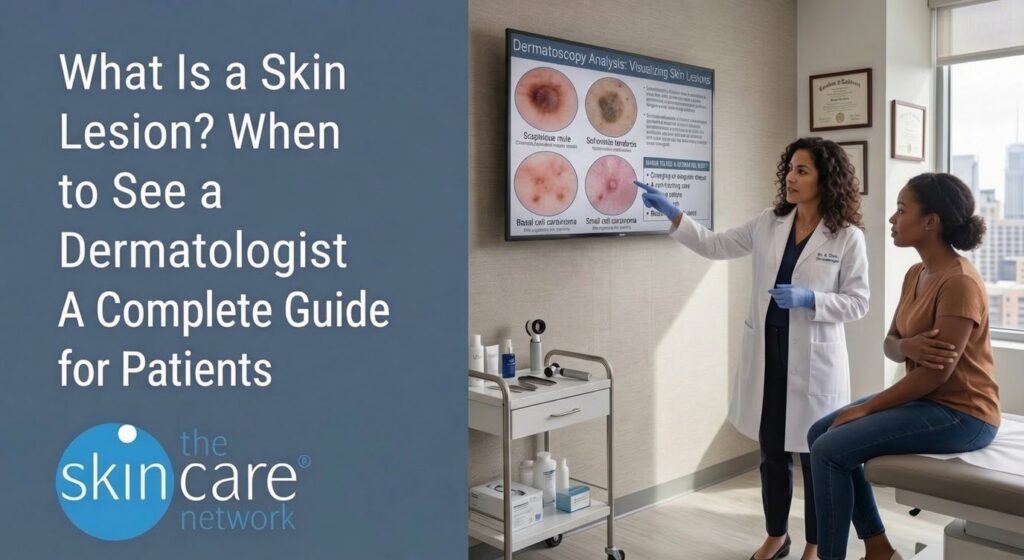
Did you know that a skin lesion simply means any area of skin that looks or feels different from the skin around it? Most are harmless, but some can signal infection, inflammation or, less commonly, skin cancer. Knowing what counts as a lesion and when to seek professional advice helps you act early and with confidence.
“Any new, changing or symptomatic skin lesion deserves assessment by a Dermatologist, especially if it meets the ABCDE warning signs.”
Key Areas We Will Cover
- A clear definition of what a skin lesion is
- Common types of skin lesions
- Benign versus suspicious lesions
- Warning signs that mean you should see a Dermatologist
- How a Dermatologist assesses skin lesions
- Practical next steps for UK patients
Introduction
A skin lesion is any mark, growth, patch or area of skin that differs from the surrounding tissue in colour, texture, size or shape. Lesions are extremely common and range from everyday moles and freckles to more concerning changes. While the majority are benign, a small proportion can be pre-cancerous or cancerous. This article explains what skin lesions are, how to recognise concerning features, and when it is important to consult a Dermatologist. At The Skin Care Network we regularly assess and manage all types of skin lesions with a focus on accurate diagnosis and early intervention.
What Is a Skin Lesion?
A skin lesion is any distinct area of skin that differs from the surrounding skin.
It may be flat or raised, pigmented or skin-coloured, smooth or rough, and can appear anywhere on the body. Lesions can be present from birth or develop later in life. They are broadly divided into primary lesions (the original change) and secondary lesions (changes that develop from primary ones, such as crusting or scarring). Most people have multiple skin lesions, the majority of which remain harmless throughout life.
What Are the Main Types of Skin Lesions?
Skin lesions are classified by their appearance and behaviour.
Common examples include:
- Macules – flat areas of colour change (for example freckles)
- Papules and nodules – raised bumps of varying size
- Plaques – larger, raised or thickened areas
- Vesicles and pustules – fluid-filled or pus-filled spots
- Moles (melanocytic naevi) – clusters of pigment cells
- Seborrhoeic keratoses, skin tags and cysts – frequent benign growths
A Dermatologist uses these descriptive terms together with dermoscopy to reach an accurate diagnosis.
When Is a Skin Lesion Considered Suspicious?
Most skin lesions are benign, but certain features raise concern.
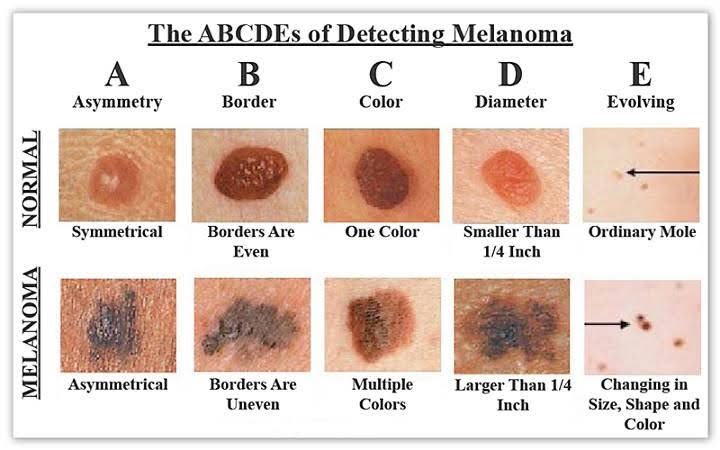
Warning signs include a lesion that is new in adulthood, changing in size, shape or colour, asymmetrical, has irregular borders, contains multiple colours, is larger than 6 mm, bleeds easily, itches persistently, or fails to heal. These features form the basis of the ABCDE rule used for pigmented lesions and also apply more broadly to non-pigmented spots. The “ugly duckling” sign – a lesion that looks different from all the others on your skin – is another useful indicator.
When Should You See a Dermatologist About a Skin Lesion?
You should arrange an assessment if a lesion is new, changing, symptomatic or simply worries you.
Specific reasons to book promptly include rapid growth, bleeding without trauma, persistent itching or pain, ulceration, or any lesion that looks different from your other moles or marks. People with fair skin, many moles, previous skin cancer or a strong family history should maintain a lower threshold for seeking advice. Early review by a Dermatologist allows accurate diagnosis and, when needed, simple treatment before problems progress.
How Does a Dermatologist Assess a Skin Lesion?
Assessment combines clinical examination with specialised tools.
The Dermatologist takes a history of the lesion and performs a full skin examination. Dermoscopy provides magnified views of structures beneath the surface that are invisible to the naked eye. In selected cases digital photography, sequential monitoring or reflectance confocal microscopy may be used. If uncertainty remains, a biopsy is performed under local anaesthetic so the tissue can be examined under the microscope. Results guide whether monitoring, treatment or further investigation is required.
What Treatment Options Exist for Skin Lesions?
Treatment depends entirely on the diagnosis.
Benign lesions that cause no symptoms may simply be monitored or removed for cosmetic reasons. Pre-cancerous lesions can often be treated with creams, cryotherapy or minor surgery. Confirmed skin cancers are usually excised with an appropriate margin. A Dermatologist will explain the options, expected recovery and any need for follow-up in clear terms so you can make an informed decision.
How Can UK Patients Arrange Assessment of a Skin Lesion?
Specialist review is straightforward in the private sector.
You can usually self-refer to a consultant Dermatologist. Bring a list of any changes you have noticed and, if possible, photographs showing how the lesion has evolved.
At The Skin Care Network, located at 68-70 Union St, Barnet EN5 4HZ, United Kingdom, our Dermatologists provide thorough lesion assessment using clinical examination and dermoscopy. Call +44 20 8441 1043 to book an appointment or discuss your concerns.
Conclusion
A skin lesion is simply any area of skin that looks or feels different from the surrounding tissue. While most are harmless, new, changing or symptomatic lesions should be checked by a Dermatologist. Early professional assessment provides accurate diagnosis, peace of mind and, when required, straightforward treatment. Regular self-examination combined with timely specialist review remains the most effective approach to skin health.
Get Started Today
Noticed a new or changing skin lesion? Book a consultation with a Dermatologist at The Skin Care Network for expert assessment and clear advice.
Frequently Asked Questions
This FAQ section answers common questions about skin lesions and when to seek help, supporting informed decisions with guidance from a Dermatologist.
No. The large majority of skin lesions are benign. Only a small proportion are pre-cancerous or cancerous. A Dermatologist can distinguish between them through examination and, if needed, biopsy.
You can learn useful warning signs such as the ABCDE rule and the ugly duckling sign, but visual inspection alone is not always reliable. Professional assessment with dermoscopy significantly improves accuracy.
Some benign lesions, such as seborrhoeic keratoses, commonly appear with age. However, any new pigmented lesion in adulthood should be checked, as melanoma can also present as a new mole.
No. Many benign lesions can be safely left alone if they cause no symptoms. Removal is considered when a lesion is suspicious, symptomatic, or cosmetically bothersome, and only after proper diagnosis.
Ideally within a few weeks, or sooner if the lesion is growing rapidly, bleeding, or causing significant symptoms. Early review allows the safest and simplest management.