SEARCH THIS WEBSITE
“Ultraviolet radiation triggers over 80% of visible skin ageing signs, yet emerging natural antioxidants can activate the body’s master defence system, Nrf2, to neutralise damage before it becomes permanent.”
Key Areas We Will Cover:
- The science of UV-induced oxidative stress and photoaging
- How environmental pollutants amplify skin damage
- The role of Nrf2 in cellular antioxidant defence
- Top natural antioxidants proven to protect and repair skin
- Practical ways to incorporate antioxidants into daily skincare
- Expert insights for long-term skin health
Natural antioxidants for skin protection are gaining attention as powerful allies against photoaging and oxidative stress caused by ultraviolet radiation (UVR) and environmental pollutants. At The Skin Care Network, our dermatologists in Barnet, England, help patients understand how these compounds work at a cellular level to prevent premature ageing and reduce cancer risk. This guide explores the latest research, including insights from redox biology, to empower you with evidence-based strategies for healthier, more resilient skin.
Understanding UV Radiation and Oxidative Stress in Skin
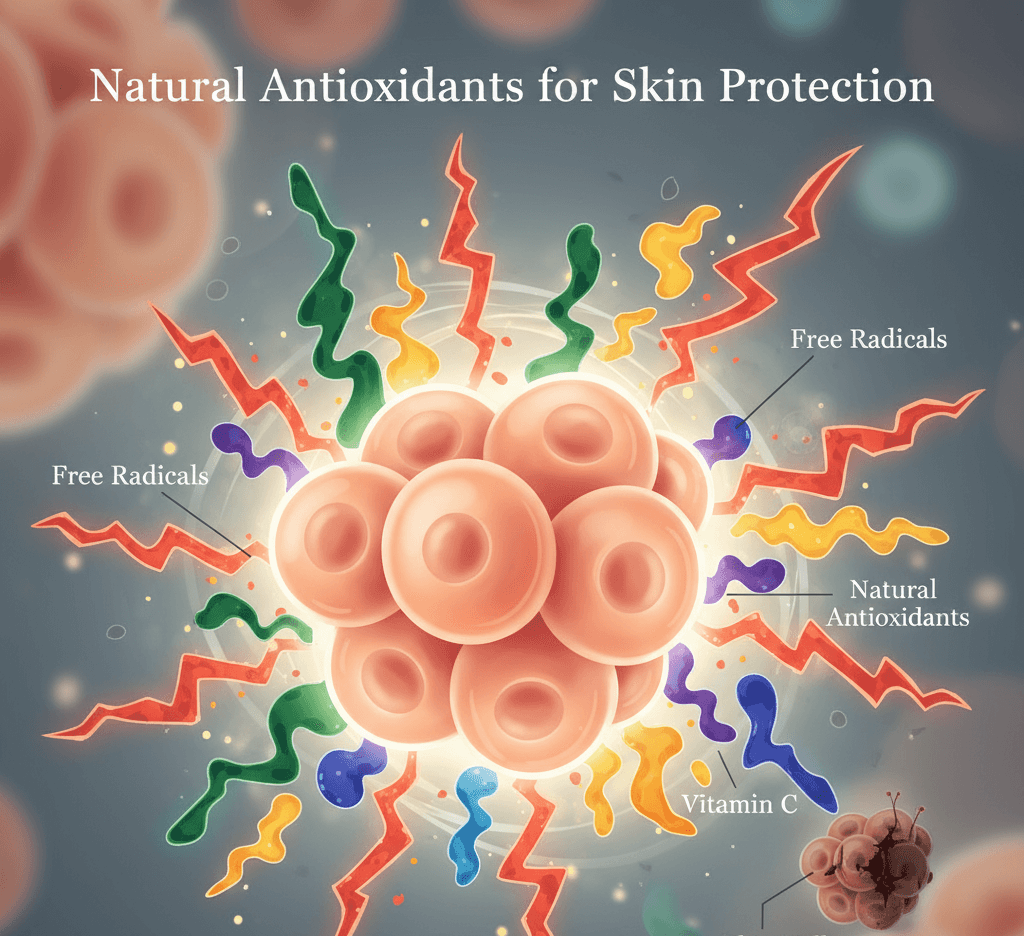
UVR from sunlight penetrates the skin, generating reactive oxygen species (ROS) that damage DNA, proteins, and lipids. This oxidative stress disrupts cellular homeostasis, leading to:
- Collagen breakdown via matrix metalloproteinases (MMPs)
- Inflammation and impaired skin barrier function
- Increased risk of photocarcinogenesis
Research shows UVA and UVB rays contribute differently: UVA drives deeper dermal ageing, while UVB causes surface-level DNA mutations.
The Synergistic Threat of Air Pollution and UV Damage
Air pollutants, such as particulate matter (PM), interact with UVR to exacerbate oxidative damage. They activate pathways like aryl hydrocarbon receptor (AhR) and NF-κB, resulting in:
- Mitochondrial dysfunction
- Accelerated extracellular matrix degradation
- Heightened melanogenesis and uneven pigmentation
Studies confirm this synergy significantly worsens premature skin ageing in urban environments.
Nrf2: The Master Regulator of Antioxidant Defence
Nuclear factor erythroid 2-related factor 2 (Nrf2) orchestrates the body’s response to oxidative insults. When activated, it upregulates genes for:
- Glutathione production
- Superoxide dismutase and catalase enzymes
- Detoxification pathways
Natural electrophilic compounds excel at stimulating Nrf2, offering superior photoprotection compared to traditional sunscreens alone.
Proven Natural Antioxidants for Skin Photoprotection
Plant-Derived Powerhouses
- Bixin (from achiote seeds): FDA-approved, topical application suppresses UV-induced photodamage and prevents hair greying in Nrf2-dependent models.
- Green tea catechins: Reduce apoptosis, oxidative stress, and DNA damage; provide radioprotective effects on normal cells.
- Curcumin (from turmeric): Downregulates MMP-1, MMP-3, and MMP-9; exhibits selective photosensitising effects on cancer cells.
- Honokiol (from magnolia): Mitigates inflammation and mitochondrial stress.
Botanical Extracts with Multi-Action Benefits
- Sulforaphane (broccoli sprout extract): Activates Nrf2 for robust detox.
- Resveratrol (grape seed): Inhibits MMP expression and supports collagen integrity.
- Silymarin (milk thistle): Protects against UV-induced immunosuppression.
Emerging Compounds
Meadowfoam glucosinolate derivatives (MBITC and MPACN) demonstrate in vitro reduction of UVB-induced epidermal thickening and DNA damage, highlighting potential in anti-photoaging formulations.
Mitochondrial-Targeted Antioxidants: The Next Frontier
Mitochondria are prime ROS targets. Cyclic nitroxides and mitochondrially directed agents reduce DNA damage and apoptosis, offering promising prevention against chronic photodamage.
Integrating Antioxidants into Your Skincare Routine
- Morning: Apply broad-spectrum SPF 50+ with added antioxidants (e.g., vitamin C serum).
- Evening: Use Nrf2-activating retinoids or polyphenol-rich creams for repair.
- Lifestyle: Consume antioxidant-rich foods; avoid peak sun hours.
Consult a dermatologist for personalised regimens, especially if you have sensitive skin or live in high-pollution areas.
Conclusion:
Natural antioxidants for skin protection, through Nrf2 activation and multi-pathway defence, provide a scientifically backed strategy to combat photoaging, oxidative stress, and environmental damage. By understanding redox biology, you can make informed choices that preserve skin health long-term.
Take Control of Your Skin’s Future Today
Book a consultation with our expert dermatologists at The Skin Care Network in High Barnet. Call 020 8441 1043 or visit skincarenetwork to start your journey towards radiant, protected skin.
Frequently Asked Questions
Natural antioxidants are essential for modern skincare because they neutralise free radicals generated by UVR and pollution, preventing cellular damage that leads to wrinkles, pigmentation, and cancer risk. Unlike sunscreens alone, they offer active repair and Nrf2-mediated defence.
Green tea catechins and curcumin stand out for their accessibility, safety, and broad-spectrum protection against inflammation and collagen loss.
No – they complement SPF by addressing damage that penetrates beyond UV filters. Always combine both for optimal photoprotection.
Most are well-tolerated, but patch testing is advised. Our dermatologists can recommend hypoallergenic formulations.
Visible improvements in texture and tone may appear in 4–6 weeks with consistent use, while cellular protection begins immediately.