SEARCH THIS WEBSITE
We shared this video from our colleagues at the Mayo because this highlights a critical point, good laser treatment can be more about regeneration than symptom relief.
Did you know that modern dermatological lasers can precisely target hair, pigment, blood vessels, sebaceous glands and scar tissue while leaving surrounding skin largely unharmed? At The Skin Care Network our consultant Dermatologists use a range of advanced laser platforms to treat both medical and cosmetic skin concerns safely and effectively. Treatment is always planned around your individual skin type, condition and goals.
“In skilled hands, lasers offer solutions that did not previously exist and can reduce the need for more invasive approaches.”
Key Areas We Will Cover
- What laser skin treatment can achieve
- Key laser platforms available at the clinic
- Common conditions treated with lasers
- What to expect during consultation and treatment
- Safety and suitability considerations
- How to arrange laser treatment with a Dermatologist in London
What Can Laser Skin Treatment Achieve?
Lasers deliver controlled light energy that is absorbed by specific targets in the skin (melanin, haemoglobin, water or sebum).
This allows precise treatment of unwanted hair, pigmented lesions, vascular changes, active acne, scarring and signs of photo-ageing. Because different wavelengths and pulse characteristics interact with different skin structures, a Dermatologist can select the most appropriate technology for each concern.
Which Laser Platforms Do We Use?
Our clinic offers several complementary laser systems so that treatment can be matched to the individual patient.
Splendor X
A dual-wavelength platform (Alexandrite 755 nm and Nd:YAG 1064 nm) that can be blended for hair removal, selected vascular lesions and pigmentation across a wide range of skin tones. Learn more on our dedicated Splendor X page.
Accure Laser
A 1726 nm laser specifically designed to target overactive sebaceous glands. It is used for inflammatory acne and offers a non-systemic option for patients seeking longer-term reduction in breakouts. Full details are available on our Accure laser and clinical evidence pages.
UltraPulse CO₂ Laser
A high-energy fractional CO₂ system used for resurfacing, acne scarring, surgical and traumatic scars, and selected textural concerns. Its depth and precision make it particularly valuable for deeper scar remodelling. See our UltraPulse CO₂ laser page for more information.
Other technologies, including vascular lasers, intense pulsed light and photodynamic therapy, are also available when clinically indicated.
What Conditions Can Be Treated with Lasers?
Common indications include:
- Unwanted hair and pseudofolliculitis barbae
- Inflammatory acne (Accure)
- Acne scarring and other scars (UltraPulse CO₂)
- Pigmented lesions and sun damage
- Vascular lesions such as spider veins, telangiectasia and certain birthmarks
- Skin texture and photo-ageing concerns
- Selected benign lesions
A Dermatologist will confirm the diagnosis and advise whether laser is the most suitable approach or whether it should be combined with other treatments.
What Happens During a Laser Consultation and Treatment?
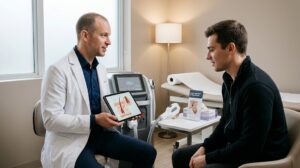
Every patient is assessed by a consultant Dermatologist or appropriately trained specialist before treatment begins.
The consultation covers your medical history, skin type, previous treatments and realistic goals. A test patch may be performed when needed. Treatment itself is carried out in clinic; most procedures are well tolerated with cooling or topical anaesthetic if required. The number of sessions depends on the condition and the laser used. Aftercare advice is provided to support healing and protect results.
Is Laser Treatment Safe?
When performed by experienced clinicians using appropriate settings for the patient’s skin type, modern lasers have a strong safety record.
Risks such as temporary redness, swelling, pigment change or rare scarring are discussed during consultation. Darker skin tones require particular care in wavelength and parameter selection; platforms such as Nd:YAG and carefully controlled fractional systems help minimise these risks.
Laser Skin Treatment at The Skin Care Network
Our London clinic provides consultant-led laser treatments in a medical setting.
Located at 68-70 Union St, Barnet EN5 4HZ, United Kingdom, we combine thorough assessment with access to advanced platforms including Splendor X, Accure and UltraPulse CO₂. Call +44 20 8441 1043 to arrange a consultation or to discuss whether laser treatment is suitable for your concern.
Conclusion
Laser skin treatment offers precise, versatile solutions for a wide range of medical and cosmetic concerns, from hair removal and acne to scarring and vascular lesions. The key to good outcomes is accurate diagnosis, appropriate technology selection and experienced delivery by a Dermatologist. At The Skin Care Network we match the right laser to the individual patient to achieve safe, effective results.
Get Started Today
Interested in laser treatment for hair, acne, scarring or another skin concern? Book a consultation with a Dermatologist at The Skin Care Network to explore the most suitable options for you.
Frequently Asked Questions
This FAQ section answers common questions about laser skin treatment, supporting informed decisions with guidance from a Dermatologist.
We use several platforms including the Splendor X (hair removal, vascular and pigment), Accure (sebaceous-gland targeting for acne) and UltraPulse CO₂ (resurfacing and scarring), along with other vascular and light-based systems when indicated.
Many modern lasers can be used safely across a range of skin types when parameters are correctly chosen by an experienced Dermatologist. Platforms with longer wavelengths (such as Nd:YAG) are often preferred for darker skin.
This varies by condition and laser. Hair removal and acne treatments typically require a course of sessions; scar resurfacing may need fewer, deeper treatments. Your Dermatologist will give a personalised estimate.
Downtime depends on the laser and intensity. Non-ablative and hair-removal treatments usually involve minimal recovery; fractional CO₂ resurfacing typically requires several days of healing.
Yes. A proper assessment by a Dermatologist is essential to confirm suitability, select the correct device and settings, and ensure safety.
Detailed information is available on our Splendor X, Accure and UltraPulse CO₂ pages.