SEARCH THIS WEBSITE
Skin Cancer on the Nose or Face: Prevention and Early Detection Including Cancer on Bridge of Nose
“The nose and face receive more sun exposure than almost any other body part, making them prime locations for skin cancer, with basal cell carcinoma being the most common type found in these areas.”
A small, persistent sore or shiny bump on the bridge of your nose might seem insignificant, but it could signal skin cancer. Fortunately, most facial skin cancers are highly treatable when detected early, often with excellent cosmetic outcomes.
Key Areas We Will Cover:
- Why the nose and face are high-risk areas for skin cancer
- Common types of skin cancer on the nose and face
- Early signs and what cancer on the bridge of nose looks like
- Prevention strategies tailored to facial skin
- How to perform effective self-examinations
- When to seek professional help and what to expect
Introduction:
Skin cancer on the nose or face is a common concern due to constant exposure to ultraviolet radiation. Understanding prevention and early detection is essential for protecting your skin and overall appearance. This guide explores the key warning signs, including cancer on the bridge of nose, and practical steps you can take to safeguard your health. At The Skin Care Network in Barnet, our specialists provide expert assessment and treatment for facial skin concerns.
Why the Nose and Face Are High-Risk Areas
The face, particularly the nose, is one of the most sun-exposed parts of the body. Cumulative UV damage over years increases the likelihood of developing skin cancer here. The thin skin and prominence of these areas also make changes more noticeable but potentially more concerning for cosmetic reasons if not addressed promptly.
Common Types of Skin Cancer on the Nose and Face
Basal Cell Carcinoma (BCC):
This is the most frequent skin cancer on the nose and face. It grows slowly and rarely spreads but can cause local damage if untreated.
Squamous Cell Carcinoma (SCC):
More aggressive than BCC, SCC can appear on sun-damaged facial skin and has a higher risk of spreading if ignored.
Melanoma:
Less common on the face than BCC or SCC but far more dangerous. It requires urgent attention.
Early Signs of Skin Cancer on the Nose or Face
Early detection dramatically improves outcomes. Look for changes that persist beyond a few weeks.
What Does Cancer on the Bridge of Nose Look Like?
- A shiny, pearly, or translucent bump
- A flat, scaly, or crusty red patch that does not heal
- An open sore that bleeds, oozes, or scabs repeatedly
- A scar-like area that feels firm or waxy
- A pink growth with raised edges and visible tiny blood vessels
These signs are often mistaken for pimples, scars, or dry skin.
Typical Appearance and Warning Signs
Common visual indicators include:
- Persistent redness or irritation on the bridge of the nose
- Rough, flaky patches that itch or bleed easily
- Raised nodules with a central depression
- Changes in existing moles or freckles (asymmetry, border irregularity, colour variation, diameter over 6mm, evolving – the ABCDE rule for melanoma)
Any lesion that fails to heal within four weeks warrants professional review.
Prevention Strategies for Facial Skin Cancer
Prevention focuses on minimising UV exposure:
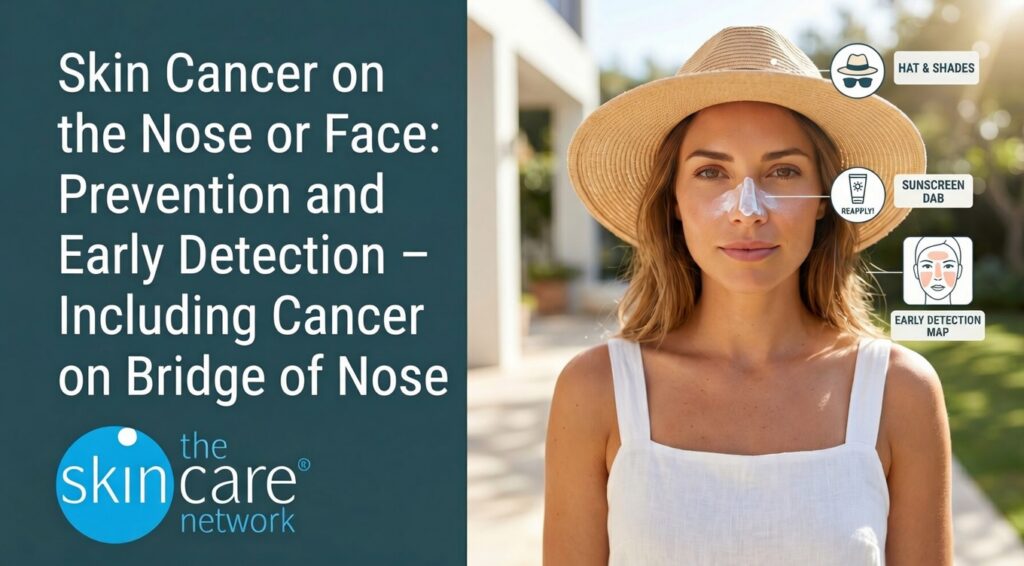
- Apply broad-spectrum sunscreen (SPF 30 or higher) daily to the face, reapplying every two hours when outdoors.
- Wear wide-brimmed hats and UV-protective sunglasses.
- Seek shade, especially between 10am and 4pm.
- Avoid tanning beds completely.
- Use lip balm with SPF protection.
Lifestyle measures, such as regular skin checks and avoiding smoking, further reduce risk.
Early Detection: Self-Examination and Professional Checks
Perform monthly self-examinations using a mirror in good lighting. Check the bridge of the nose, sides, and all facial areas systematically. Use a hand mirror for hard-to-see spots.
Annual professional skin checks are recommended, particularly for those with fair skin, history of sunburns, or previous skin cancers. Early intervention often allows for simpler treatments with better cosmetic results.
Diagnosis and Treatment Overview
A dermatologist may perform a biopsy for confirmation. Treatments for facial skin cancer include surgical excision, Mohs micrographic surgery (ideal for the nose to preserve healthy tissue), topical therapies, or cryotherapy, depending on the type and stage.
Conclusion
Skin cancer on the nose or face is largely preventable and highly manageable with early detection. By recognising signs like potential cancer on the bridge of nose and adopting strong sun-protection habits, you can significantly reduce your risk and maintain healthy, confident skin.
Take Control of Your Skin Health Today
Do not wait if you notice any suspicious changes on your nose or face. Book a thorough skin cancer assessment with the experts at The Skin Care Network. Located at 68-70 Union Street, Barnet EN5 4HZ, our team offers compassionate, specialised care. Contact us on 020 8441 1043 or visit our clinic for professional evaluation and peace of mind.
FAQ
Facial skin cancer, particularly on the nose, is common due to high sun exposure, but most cases are treatable when caught early. Prevention through daily sun protection and regular checks is the most effective approach.
Common early signs include non-healing sores, shiny bumps, or scaly red patches, especially on the bridge of the nose.
Most cases are basal cell carcinoma, which grows slowly and is highly treatable. However, prompt medical assessment is essential to rule out more aggressive types.
Use daily broad-spectrum sunscreen, wear protective clothing and hats, avoid peak sun hours, and never use tanning beds.
Perform a self-examination monthly and arrange professional skin checks annually or more frequently if you are at higher risk.
See a dermatologist if a spot persists for more than four weeks, bleeds easily, or changes in appearance. Early evaluation at The Skin Care Network can make a significant difference.